By Brad Needham
When tragedy strikes, or there are difficult and painful stories to tell, there is little like a newspaper to get the information out. At design competitions like the Society for News Design’s creative competition, playful and fun pages often dominate. But sometimes powerful and painful stories, partially told through thoughtful visual journalism make their mark on judges, and almost certainly on readers of these papers. One entry in particular left judges at SND45 talking and, in some cases, shaken.
I will look at a few tough topics here, including the wars in Gaza and Ukraine, but I will start with mass shootings and the now infamous AR-15, a weapon so deadly those who don’t live in the United States have a hard grasping how it can be so prevalent. Many Americans wonder the same.
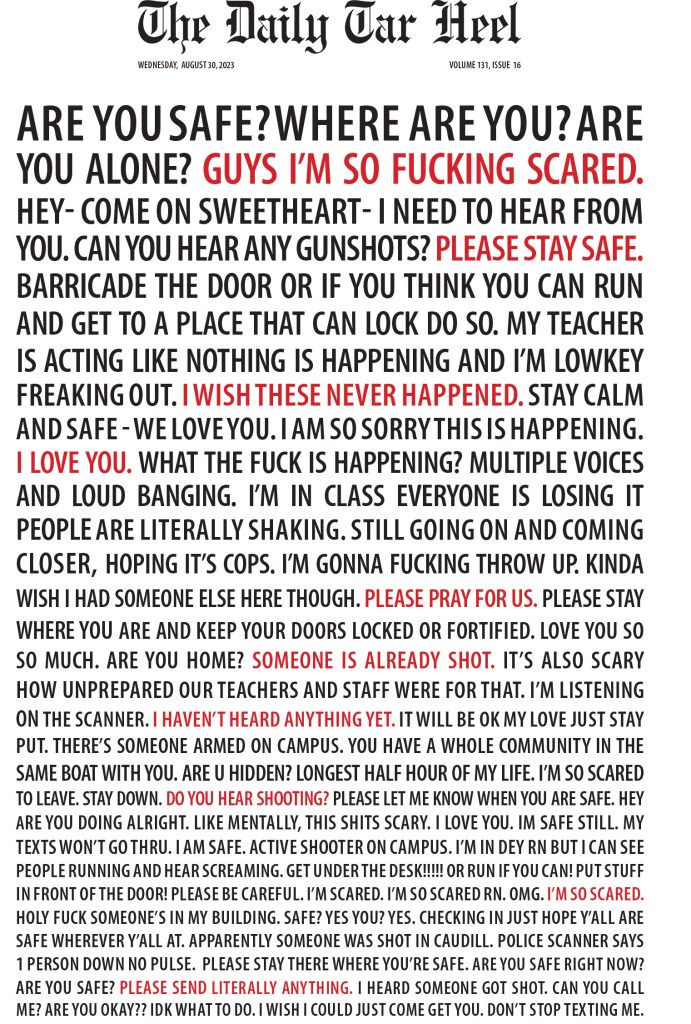
I will get into the Washington Post entries that have provoked so much response, but first I wanted to share an incredibly powerful page that evokes emotion in a way I feel only a newspaper can. After a deadly shooting on campus (an AR-15 was not used in this shooting), The Daily Tar Heel, a university paper at the University of North Carolina Chapel Hill, ran with this cover. All text. Real words from texts and social media sent during the shooting. Here is more on how the page came to be.
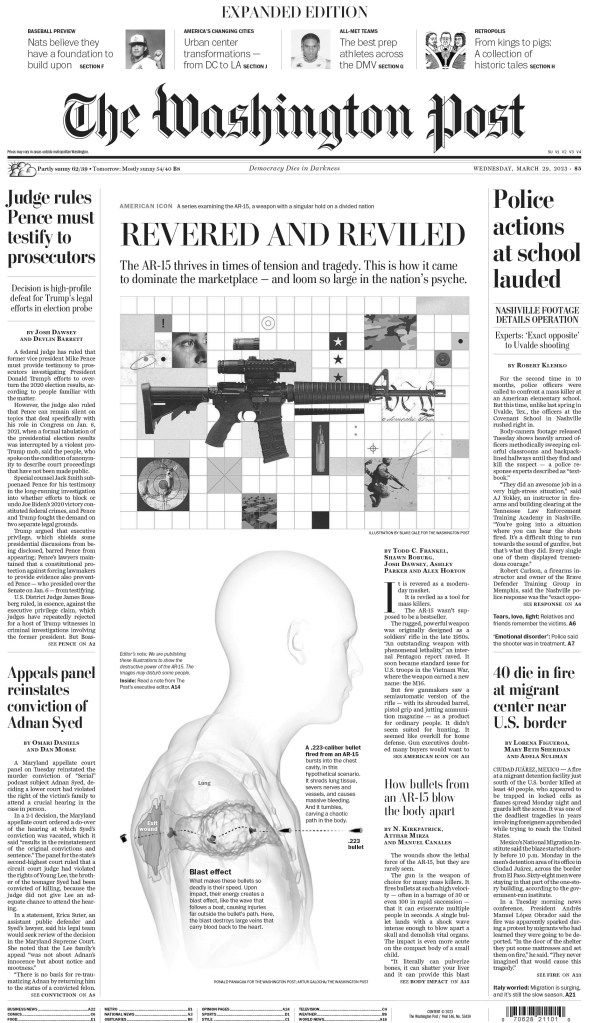
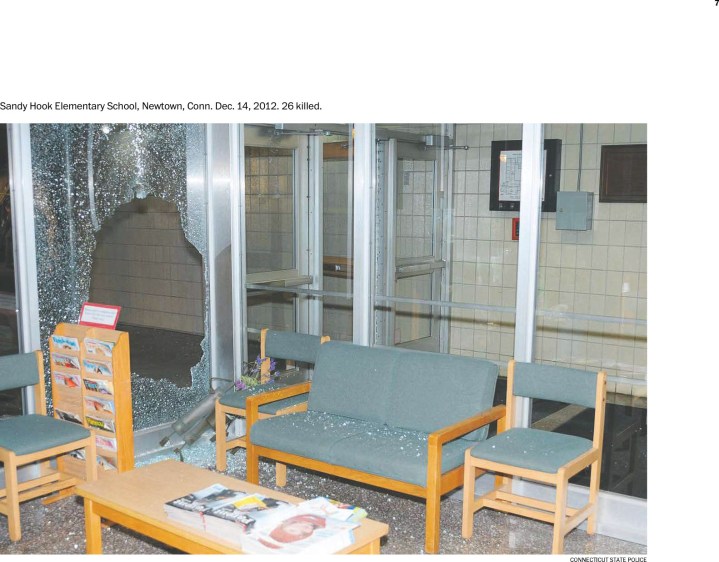
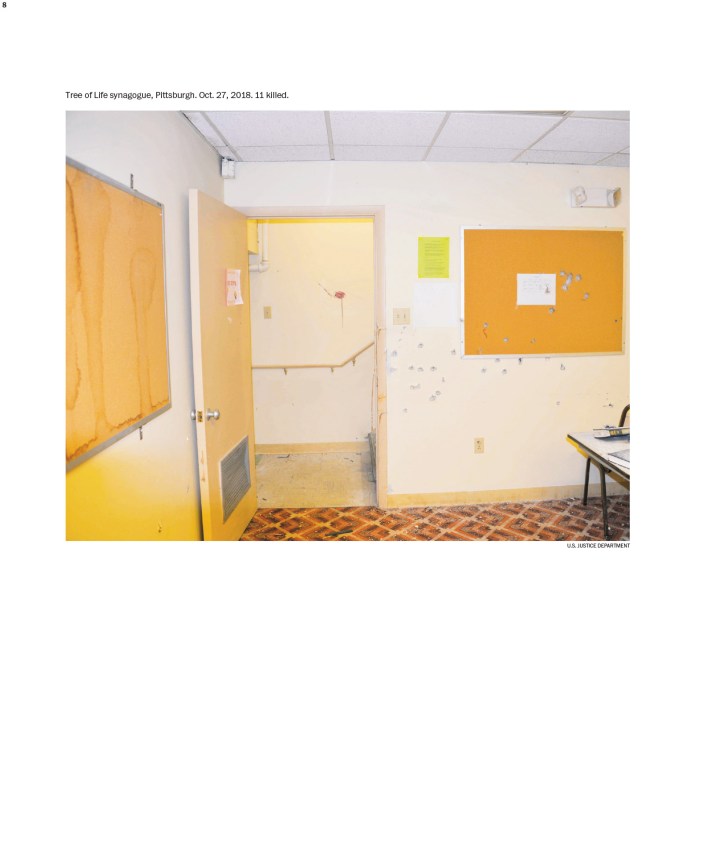
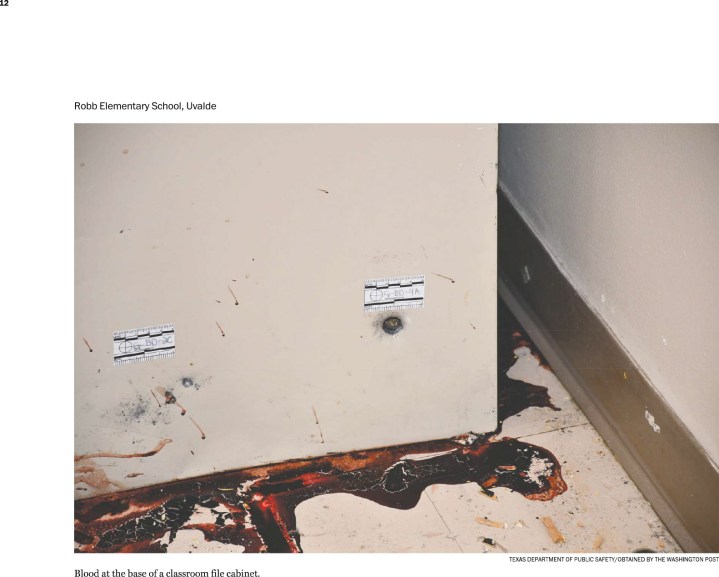
This is a sample of some of the Washington’s Post powerful entry on the AR-15, including this digital presentation. I haven’t included all of it, and I have left out the most graphic pieces. What’s striking about this piece, after the front page, is the simplicity of it, the starkness. It is minimalist, letting the photos do the work. If you want to look at more from this powerful package, you can find it here. This entry went on to win Best in Show and SND45. It’s the first time this award has been handed out since I have been involved as it requires such a high threshold. Only awards that have been awarded gold medals are considered. To win a gold, a page or entry needs to be nearly flawless. State of the art, and pushing boundaries. And then at least 75 per cent of all judges must agree one entry deserves that title, over all the other gold medals.
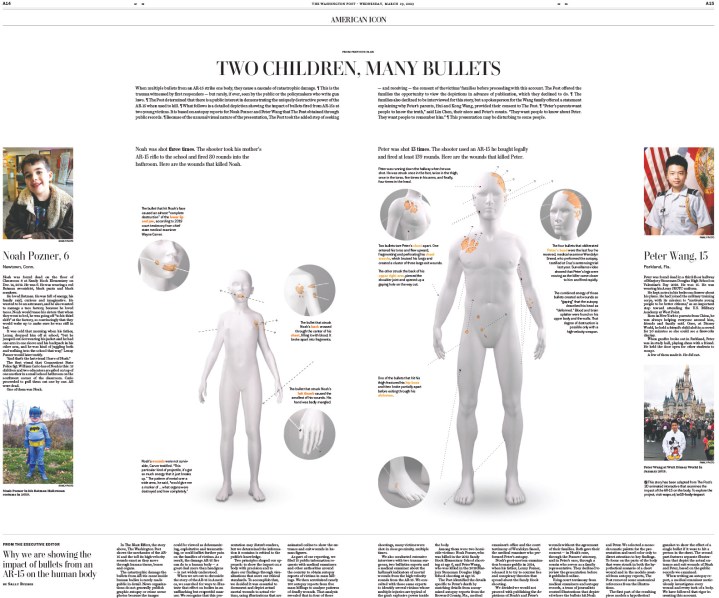
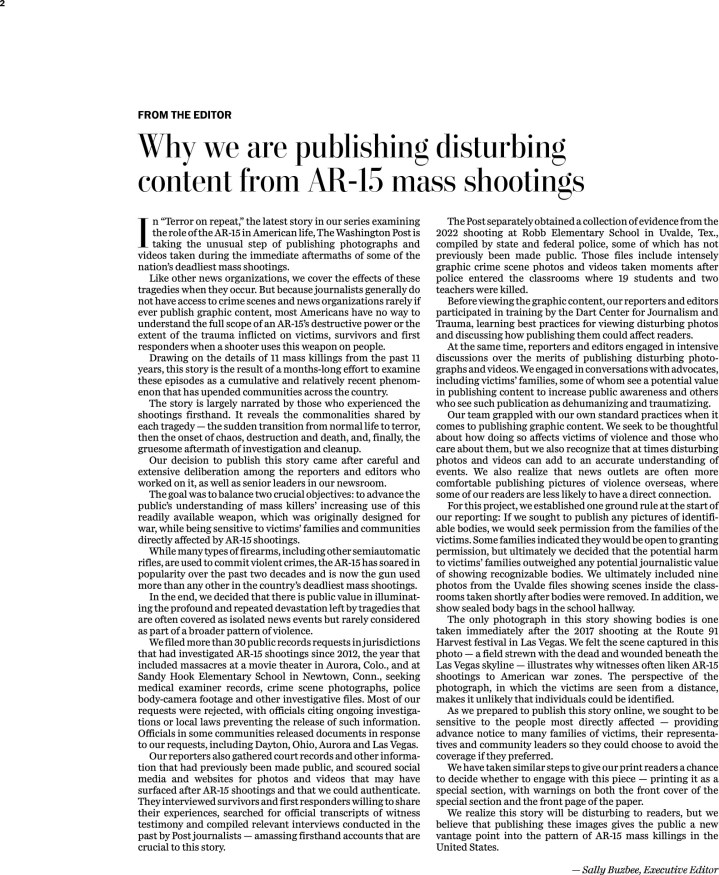
This digital portion of the entry takes the above page and brings it to a new harrowing level. A warning, it is hard to look at, but it is so incredibly powerful. The print entry alone was next level, but the print and digital combo entry is what one Best in Show. Together this entry evoked so much emotion.

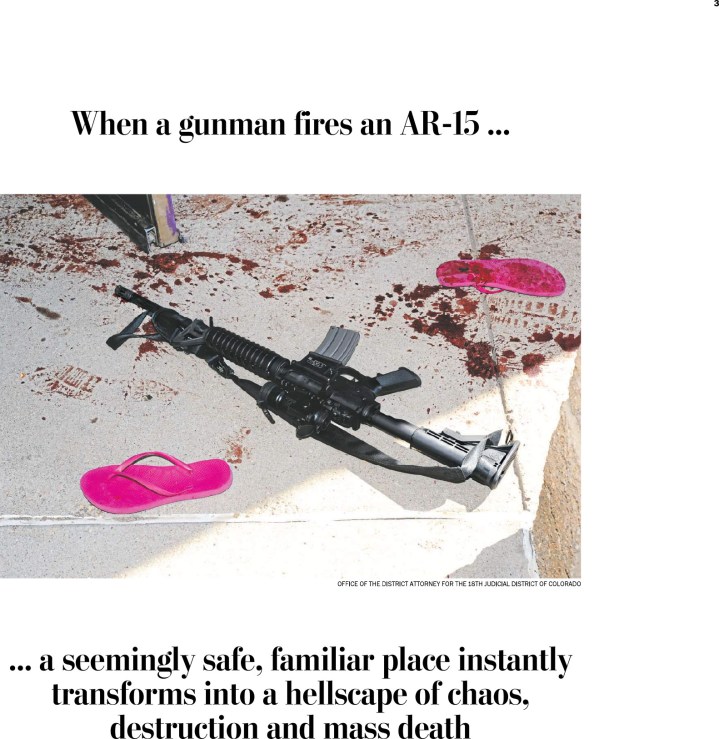
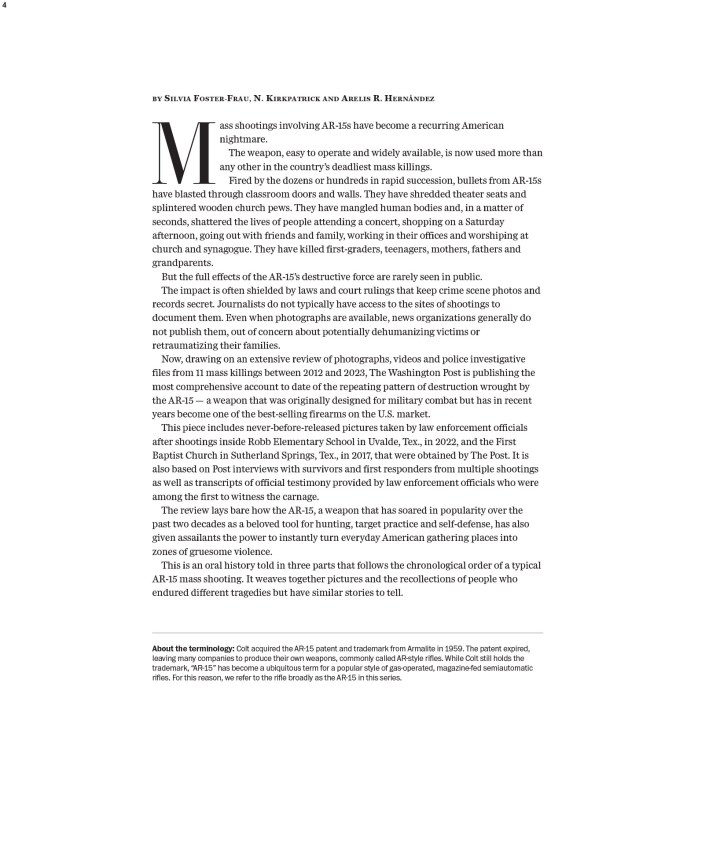
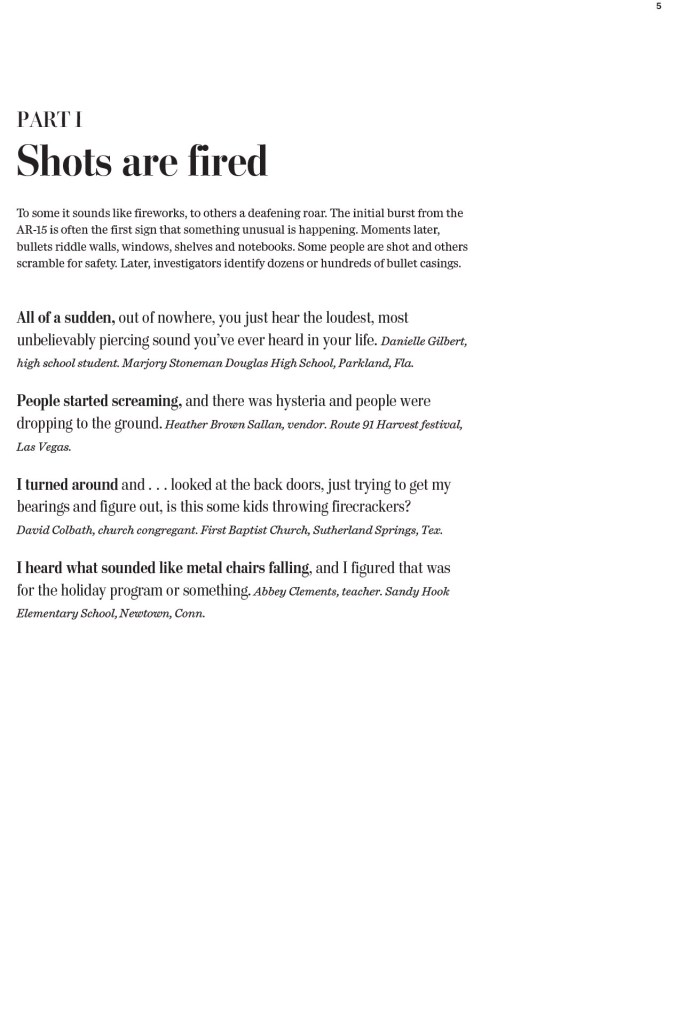
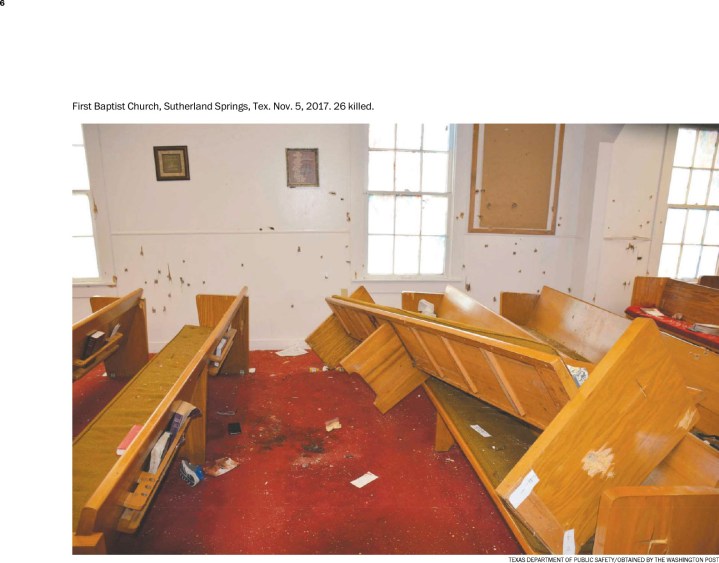
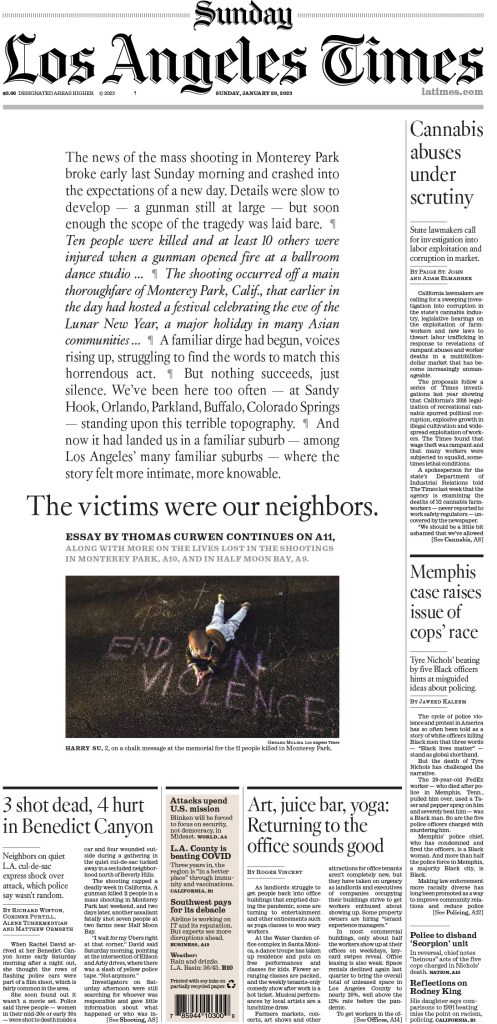
And here is one more page from a mass shooting, this time from the Los Angeles Times. An AR-15 wasn’t used in this shooting.
Wars and other tragedies
I expected to see more entries from both the Gaza and Ukraine wars. There were some powerful pages, many of them driven by bold photo choices. Before the war in Ukraine began, seeing dead bodies on newspaper pages wasn’t that common, but as the death toll started to rise, editors started to make the hard decisions to show the reality unfolding. This is war. As well, many photos that drove the pages show the raw emotion of people dealing with tragedy and loss, in some cases on both sides of war. The pages on Ukraine are by The New York Times and De Morgen (Belgium), followed by the war in Gaza, from Politiken and two from the Globe and Mail, which has been a leader on this coverage in Canada.
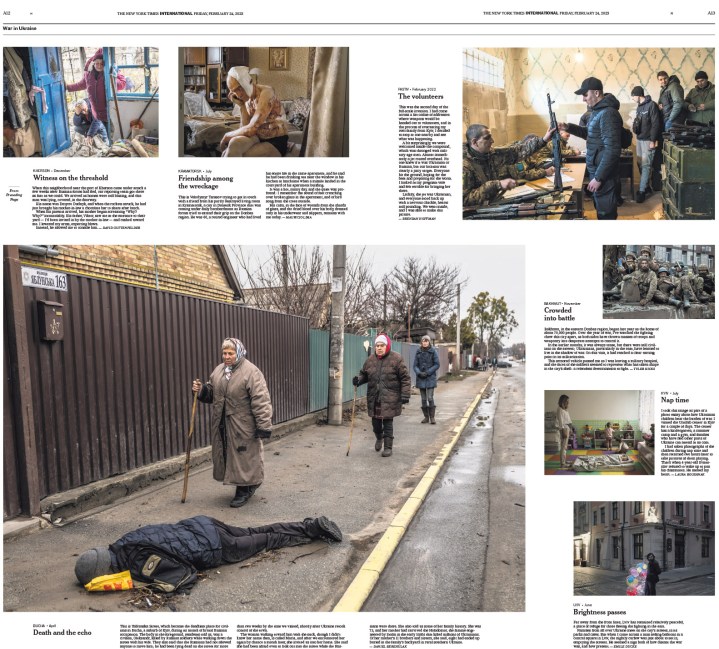

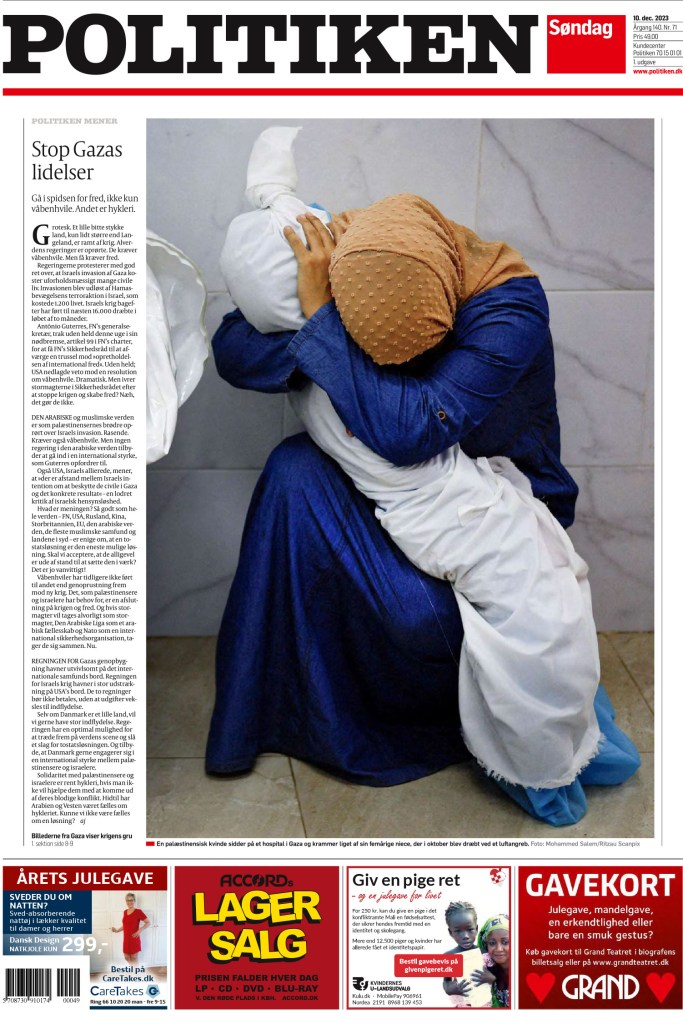
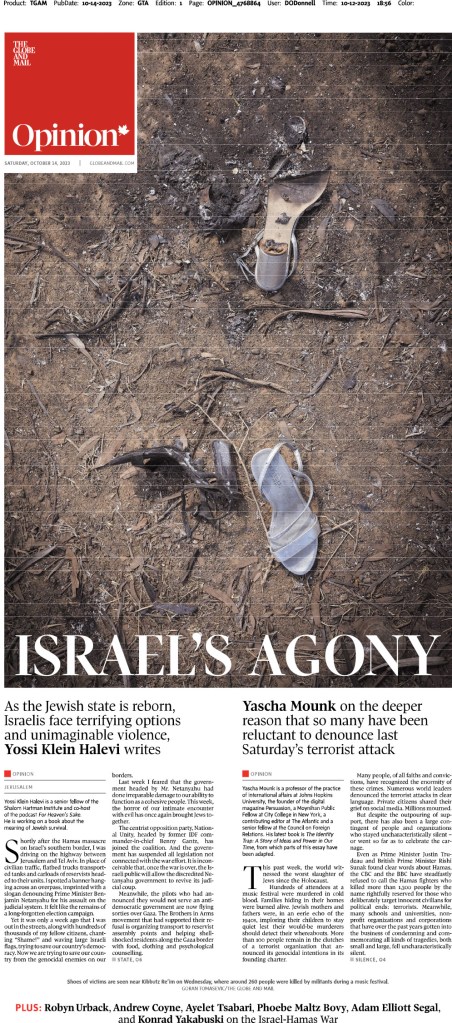
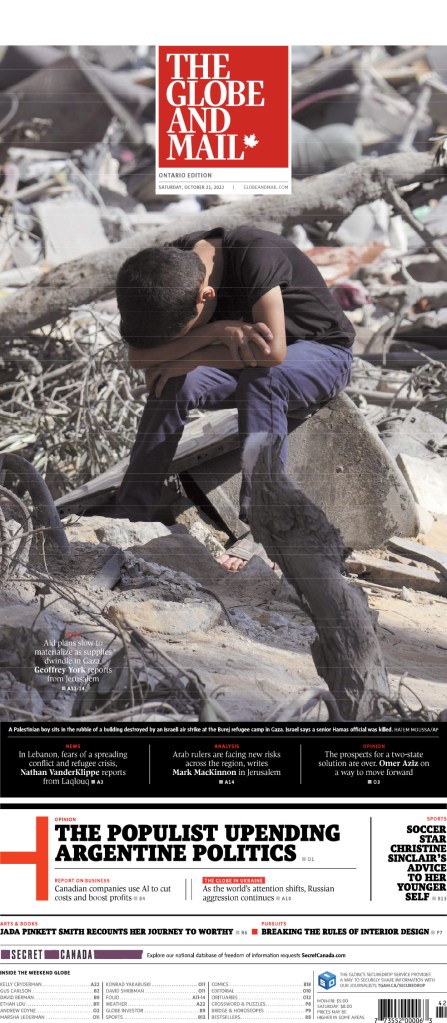
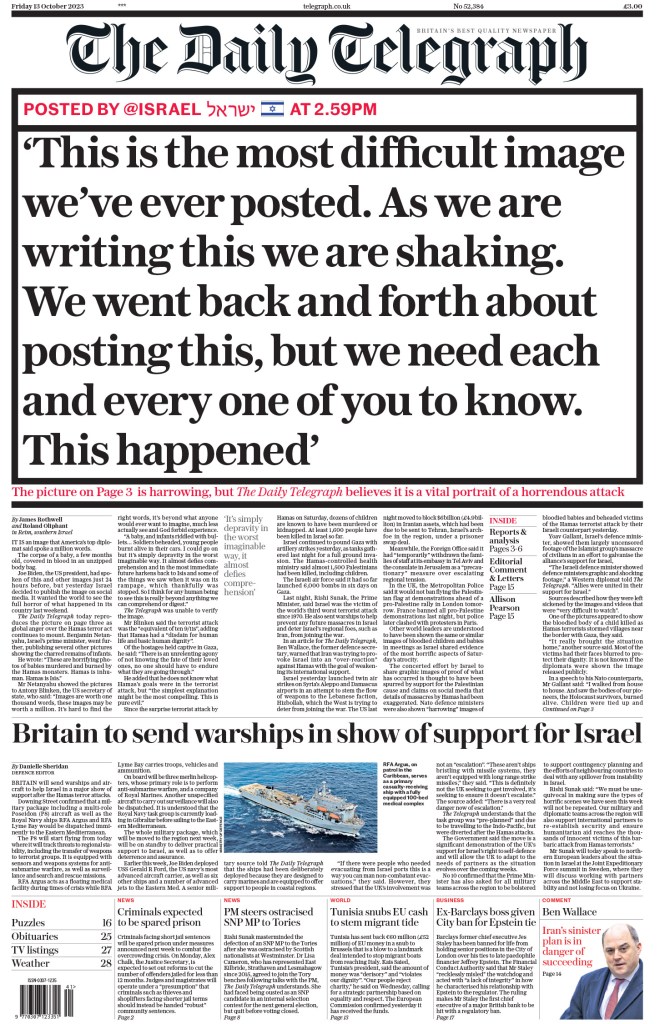
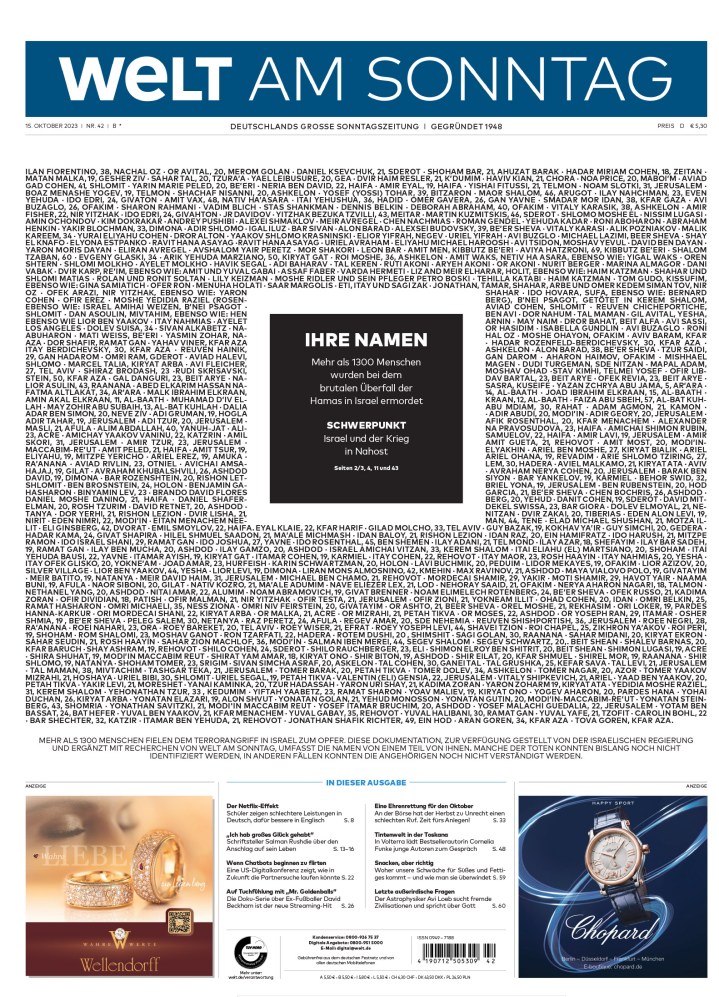
Not all of the powerful pages were driven by art. Some used text to convey the message and the gravity of the situation, such as The Daily Telegraph, from Britain, and Welt am Sontag, a German newspaper. Welt am Sontag lists the names of those killed in the October 7 attack by Hamas.
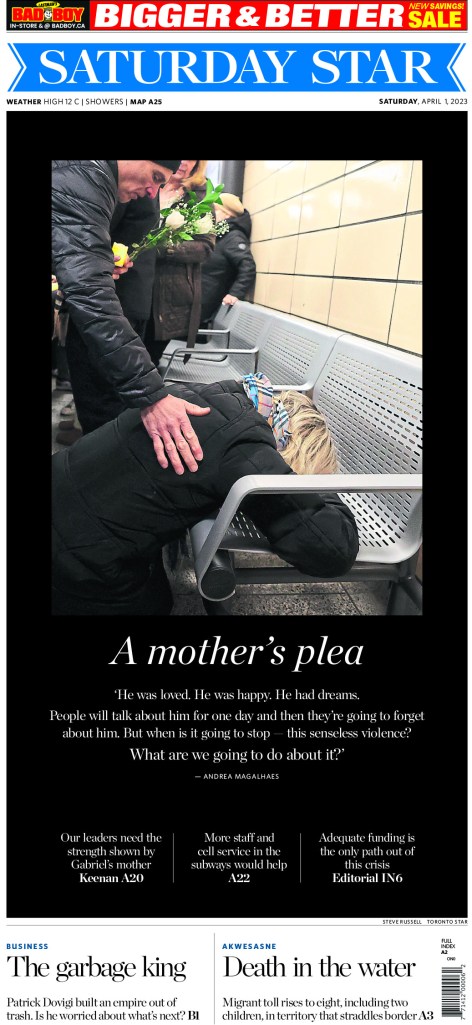
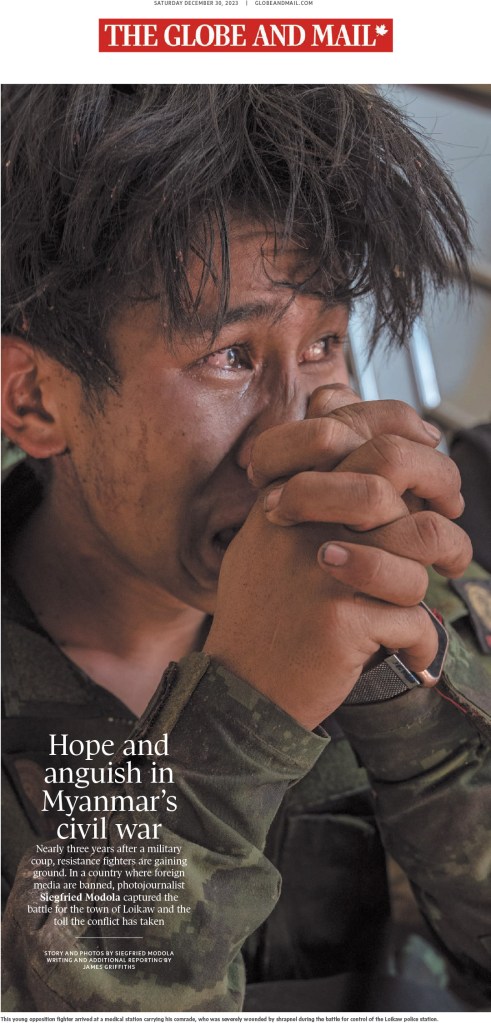
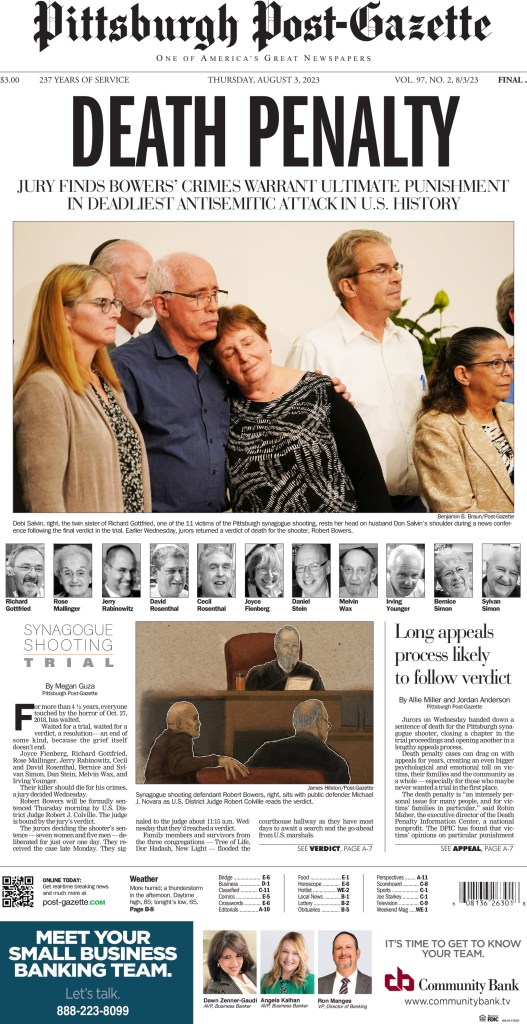
And here are a few other pages tackling hard topics. Included are pages from the Toronto Star, Globe and Mail and the Pittsburgh Post-Gazette. Each of these are driven by emotional art. While these pages can be difficult to look at, I feel they show the power of print journalism. Newspapers still play a vital role, and these pages are examples of this.
 Covers in a dangerous time